Streamlining Financial Operations with Modern Tools Adopting advanced digital solutions for managing sales and purchases revolutionizes the way businesses handle their accounts. These tools ...

25Jun

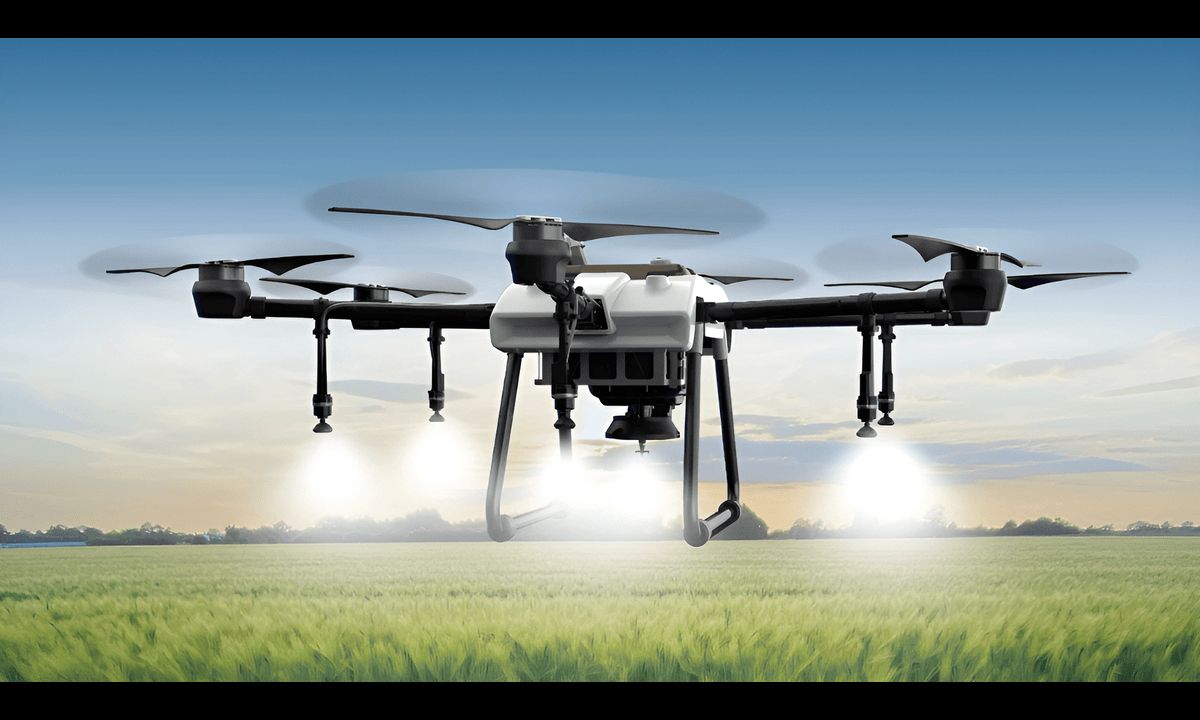
When selecting propulsion and motion-control components, buyers typically start with the mission: thrust requirements, dynamic response, payload mass, and how precisely the system must react under load. For drone power motors, the most practical way to narrow options is to compare performance targets first (power density, torque or thrust needs, efficiency, and thermal behavior), then map those requirements to motor characteristics such as KV range, voltage compatibility, size constraints, and mounting geometry. For FPV racing drone Kpower Technology Co. Expands UAV Motor and Servo Solutions for Drone Power Motors and FPV Racing Drone Motors motors, the decision often comes down to instantaneous acceleration and stable power delivery during aggressive throttle changes, where consistent electromagnetic performance and tight mechanical manufacturing tolerances matter. Pairing these motors with the correct servo technology is equally important: servos handle auxiliary precision tasks like camera stabilization, gimbal actuation, steering adjustments, and other motion subsystems that must maintain accuracy while minimizing jitter and drift.
A smart procurement approach is to confirm integration details before committing to a part number. Start by verifying voltage ratings and the motor/servo interface requirements for your controller. For servos, communication protocol support can determine whether integration is straightforward or requires extra adapters. Look for systems that offer flexibility across common control methods, such as PWM, UART-TTL, RS-485, and CAN-bus, so you can align torque and accuracy goals with your existing flight stack and wiring design. Next, evaluate physical constraints: ultra-compact packaging, shaft or gear interface options, and tolerance levels for mechanical fit. Finally, consider operational environment and duty cycle. For builds involving frequent high-intensity maneuvers, ensure the motor drive system and servo drive behavior can sustain performance without unacceptable efficiency loss or temperature rise. Buyers also benefit from documentation that supports design matching—dimensional drawings, electrical parameters, and guidance on pairing motors with appropriate tuning for stable motion response.
reflects a buyer-focused strategy: provide a cohesive set of propulsion and precision-control options while reducing the time required for R&D engineers to find compatible components. The portfolio is designed to cover mainstream drone power motors as well as motors optimized for competitive FPV racing demands, emphasizing rapid response and reliable thrust delivery during demanding flight profiles. On the servo side, buyers gain access to a broad selection of servo types—brushless, coreless, digital, micro, waterproof, and high-torque industrial—so teams can select based on torque needs, size limits, and durability requirements. Just as important, the ecosystem supports scenario-adaptive system design rather than treating parts as isolated purchases. That means teams can consider modular drive approaches and customized aerial drive solutions when they need integration that matches vehicle form factors, power budgets, and performance targets.
If your goal is faster component selection and smoother system integration, focus on compatibility first—electrical ratings, control interface, mechanical fit, and performance behavior under your expected flight profile. Then choose a supplier ecosystem that supports both standard motor/servo selection and customization when your design requires specialized tuning. With an emphasis on precision manufacturing, multi-dimensional testing, and end-to-end engineering support, Kpower is positioned to help drone teams move from prototype validation to reliable mass production with fewer integration risks, as reflected in offerings highlighted on kpower.com.


 How to create new field